

Can a manifold outlet be connected to multiple pipes?
Jan 14, 2026
Leave a message
A manifold outlet is a crucial component in many fluid - handling systems, including automotive exhaust systems, plumbing, and industrial piping networks. One common question that arises is whether a manifold outlet can be connected to multiple pipes. In this blog, as a manifold outlet supplier, I will delve into this topic, exploring the technical aspects, advantages, limitations, and practical applications.
Technical Feasibility
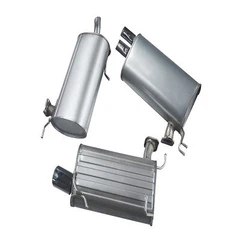
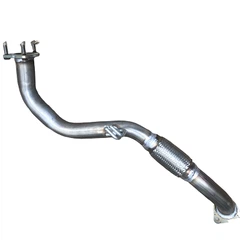
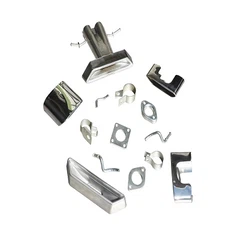
From a technical perspective, it is entirely possible to connect a manifold outlet to multiple pipes. A manifold is designed to distribute a single flow into multiple paths or collect multiple flows into one. The key lies in the design and engineering of the manifold itself. For instance, in an automotive exhaust system, a well - designed exhaust manifold can split the exhaust gases from multiple cylinders into separate pipes. This distribution ensures that the exhaust gases are efficiently routed through the rest of the exhaust system, such as the Custom Exhaust Metal Flange, mufflers, and catalytic converters.
The manifold outlet must be sized appropriately to handle the combined flow rate of the multiple pipes. If the outlet is too small, it can cause excessive backpressure, which can lead to reduced system performance. Conversely, an oversized outlet may result in uneven flow distribution among the pipes. Engineers use fluid dynamics principles to calculate the optimal dimensions of the manifold outlet and the connected pipes. They consider factors such as the viscosity of the fluid, the flow rate, and the pressure drop across the system.
Advantages of Connecting Multiple Pipes to a Manifold Outlet
1. Flow Distribution
One of the primary advantages of connecting multiple pipes to a manifold outlet is the ability to distribute the flow evenly. In a plumbing system, for example, a manifold can distribute water to different fixtures in a building. This ensures that each fixture receives an adequate supply of water at the appropriate pressure. In an industrial setting, a manifold can distribute a chemical or a coolant to multiple processing units, maintaining consistent operating conditions across all units.
2. Space and Cost Efficiency
Using a manifold to connect multiple pipes can save space and reduce costs. Instead of having multiple individual connections, a single manifold outlet can serve as a central point for all the pipes. This simplifies the piping layout, reduces the amount of piping material required, and minimizes the number of connection points, which in turn reduces the risk of leaks. In an automotive exhaust system, a single exhaust manifold can connect to multiple exhaust pipes, eliminating the need for complex and space - consuming individual connections.
3. System Flexibility
Connecting multiple pipes to a manifold outlet provides system flexibility. It allows for easy addition or removal of pipes as the system requirements change. For example, in a manufacturing plant, if a new processing unit is added, a new pipe can be easily connected to the existing manifold outlet. This adaptability makes the system more future - proof and reduces the need for major overhauls when system changes are required.
Limitations and Challenges
1. Flow Imbalance
One of the main challenges in connecting multiple pipes to a manifold outlet is achieving even flow distribution. Differences in pipe length, diameter, and friction can cause flow imbalances among the pipes. For example, in an exhaust system, if one of the connected pipes has a higher resistance due to a bend or a restriction, the flow of exhaust gases will be reduced in that pipe compared to the others. This can lead to uneven performance and potentially damage the system over time.
2. Pressure Drop
Connecting multiple pipes to a manifold outlet can increase the pressure drop across the system. As the fluid flows through the manifold and into the multiple pipes, it encounters additional resistance, which can reduce the overall system pressure. This is particularly important in systems where maintaining a specific pressure is critical, such as in a high - pressure hydraulic system. Engineers need to carefully design the manifold and the connected pipes to minimize the pressure drop while ensuring adequate flow distribution.
3. Maintenance and Inspection
With multiple pipes connected to a manifold outlet, maintenance and inspection can be more challenging. It can be difficult to access all the connection points for inspection and repair. In addition, if a leak occurs in one of the pipes, it may be more difficult to locate and fix compared to a single - pipe system. Regular maintenance and inspection procedures need to be established to ensure the long - term reliability of the system.
Practical Applications
1. Automotive Exhaust Systems
In automotive exhaust systems, a manifold outlet is commonly connected to multiple exhaust pipes. The exhaust manifold collects the exhaust gases from the engine cylinders and distributes them to the rest of the exhaust system, including the Catalytic Converter Cone, mufflers, and tailpipes. The design of the exhaust manifold is crucial for optimizing engine performance and reducing emissions. A well - designed manifold ensures that the exhaust gases are evenly distributed among the pipes, minimizing backpressure and improving engine efficiency.
2. Plumbing Systems
In plumbing systems, manifolds are widely used to distribute water to different fixtures in a building. A water manifold can connect to multiple pipes that supply water to sinks, toilets, showers, and other fixtures. This allows for easy control of the water flow and pressure to each fixture. Manifolds are also used in heating systems to distribute hot water to different radiators or under - floor heating loops.
3. Industrial Piping Networks
In industrial settings, manifolds are used in a variety of applications, such as chemical processing, oil and gas production, and power generation. For example, in a chemical plant, a manifold can distribute a chemical feedstock to multiple reactors. In an oil refinery, a manifold can collect and distribute oil or gas from different wells or processing units. The use of manifolds in industrial piping networks improves system efficiency, reduces costs, and enhances safety.


Conclusion
In conclusion, a manifold outlet can be connected to multiple pipes, and this configuration offers several advantages in terms of flow distribution, space and cost efficiency, and system flexibility. However, it also presents challenges such as flow imbalance, pressure drop, and maintenance issues. As a manifold outlet supplier, we understand the importance of proper design and engineering to ensure the optimal performance of systems that connect multiple pipes to a manifold outlet.
If you are considering using a manifold outlet in your project and need to connect multiple pipes, we are here to help. Our team of experts can provide you with customized solutions based on your specific requirements. Whether you are in the automotive, plumbing, or industrial sector, we have the knowledge and experience to design and supply high - quality manifold outlets that meet your needs. Contact us today to start a discussion about your project and explore the possibilities of using our manifold outlets.
References
- White, F. M. (2011). Fluid Mechanics. McGraw - Hill.
- Munson, B. R., Young, D. F., & Okiishi, T. H. (2012). Fundamentals of Fluid Mechanics. Wiley.
- Heywood, J. B. (1988). Internal Combustion Engine Fundamentals. McGraw - Hill.
Send Inquiry