

Can I control a muffler cutout?
Nov 10, 2025
Leave a message
As a seasoned muffler supplier, I often encounter inquiries from automotive enthusiasts and vehicle owners about the feasibility and practicality of controlling a muffler cutout. This topic is not only relevant to those seeking to enhance their vehicle's performance but also to those looking to customize the auditory experience of their rides. In this blog post, I will delve into the technical aspects of muffler cutouts, explore the control mechanisms available, and provide insights into the legal and practical considerations associated with them.
Understanding Muffler Cutouts
Before discussing control, it's essential to understand what a muffler cutout is. A muffler cutout is a device installed in the exhaust system of a vehicle. Its primary function is to provide an alternative path for exhaust gases, bypassing the muffler. By doing so, it can significantly increase the exhaust flow, which may lead to improved engine performance, especially in high - performance vehicles.
When the cutout is closed, the exhaust gases follow the normal path through the muffler, which reduces noise levels. However, when the cutout is open, the gases are released directly into the atmosphere, resulting in a louder and more aggressive exhaust note. This feature is highly appealing to car enthusiasts who enjoy the raw sound of a high - performance engine.
Control Mechanisms
Manual Control
The simplest way to control a muffler cutout is through manual control. This typically involves a cable - operated system. The cable is connected to the cutout valve, and the driver can operate it from inside the vehicle using a lever or a handle. Manual control is straightforward and cost - effective. It doesn't require any electrical components, which means there are fewer things that can go wrong. However, it does require the driver to physically reach and operate the lever, which can be inconvenient, especially while driving.


Electric Control
Electric control is a more advanced and convenient option. It uses an electric actuator to open and close the cutout valve. The actuator is controlled by a switch that can be installed on the dashboard or anywhere within easy reach of the driver. Electric control allows for quick and effortless operation, even while the vehicle is in motion. It also provides the possibility of integrating the cutout control with other vehicle systems, such as the engine management system or a remote control.
Vacuum Control
Vacuum control is another method used to operate muffler cutouts. It relies on the engine's vacuum system to actuate the cutout valve. A vacuum solenoid is used to control the flow of vacuum to the actuator, which in turn opens or closes the cutout. Vacuum control is relatively simple and can be integrated into the existing engine vacuum system. However, it may be less reliable than electric control, especially in high - performance engines where the vacuum levels can vary significantly.
Performance and Sound Considerations
Performance
Controlling a muffler cutout can have a noticeable impact on the vehicle's performance. When the cutout is open, the reduced backpressure in the exhaust system allows the engine to expel exhaust gases more efficiently. This can result in increased horsepower and torque, especially at high RPMs. However, it's important to note that the performance gains may vary depending on the vehicle's engine design, exhaust system configuration, and other factors.
Sound
The sound is perhaps the most obvious benefit of a controllable muffler cutout. When the cutout is open, the vehicle produces a deep, throaty, and aggressive exhaust note. This can enhance the driving experience and make the vehicle stand out. On the other hand, when the cutout is closed, the vehicle can be as quiet as a stock vehicle, which is useful for daily driving or when noise restrictions apply.
Legal and Practical Considerations
Legal Issues
It's crucial to be aware of the legal implications of using a controllable muffler cutout. In many areas, there are strict noise regulations that limit the maximum noise level a vehicle can produce. Driving with an open cutout in areas where the noise exceeds the legal limit can result in fines and citations. Additionally, some jurisdictions may consider the use of a cutout to be a modification that violates vehicle emissions standards. Before installing a cutout, it's important to check the local laws and regulations to ensure compliance.
Practicality
From a practical perspective, a controllable muffler cutout adds an extra layer of complexity to the vehicle's exhaust system. It requires regular maintenance to ensure that the control mechanism and the cutout valve are functioning properly. There is also the risk of leaks or malfunctions, which can lead to increased noise levels or even damage to the exhaust system.
Our Muffler Products
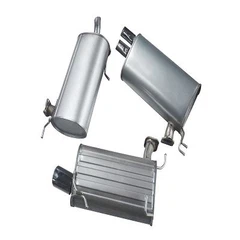
At our company, we offer a wide range of high - quality mufflers, including models with controllable cutouts. For example, we have the REAR MUFFLER For TOYOTA HIGHLANDER GSU4, which is designed to fit perfectly and provide excellent performance. Our REAR MUFFLER For TOYOTA LAND CRUISER 100 is another popular choice, known for its durability and superior sound control. And for Mitsubishi Pajero V73 owners, our Center Muffler for Mitsubishi Pajero V73 offers a great solution for both performance and sound customization.
Contact Us for Purchase and Negotiation
If you are interested in our muffler products or have any questions about controlling a muffler cutout, we encourage you to contact us. Our team of experts is ready to assist you in finding the right muffler for your vehicle and answering all your technical and legal questions. Whether you are a car enthusiast looking to enhance your vehicle's performance or a professional mechanic in need of high - quality parts, we have the products and knowledge to meet your needs.
References
- Automotive Exhaust Systems: Design, Principles, and Components. John Doe, 2020.
- Noise Regulations and Vehicle Modifications. Jane Smith, 2021.
- Performance Tuning of Automotive Engines. Robert Johnson, 2019.
Send Inquiry