

How do muffler clamps work?
Aug 26, 2025
Leave a message
As a seasoned muffler supplier, I've witnessed firsthand the critical role that muffler clamps play in the automotive exhaust system. In this blog post, I'll delve into the science behind how muffler clamps work, exploring their design, functionality, and the importance of proper installation.
Understanding the Basics of Muffler Clamps
At their core, muffler clamps are simple yet ingenious devices designed to secure various components of the exhaust system together. They are typically made from high-strength materials such as steel or stainless steel, which provide the necessary durability and resistance to corrosion in the harsh environment of the exhaust system.
The primary function of a muffler clamp is to create a tight and secure connection between two exhaust pipes or between an exhaust pipe and a muffler. This connection is crucial for several reasons. Firstly, it prevents exhaust gases from leaking out of the system, which can not only be a safety hazard but also lead to a decrease in engine performance and an increase in emissions. Secondly, it helps to reduce vibration and noise transmission, ensuring a smoother and quieter ride for the vehicle occupants.
Types of Muffler Clamps
There are several different types of muffler clamps available on the market, each with its own unique design and application. The most common types include U-bolt clamps, band clamps, and V-band clamps.
- U-Bolt Clamps: U-bolt clamps are perhaps the most widely used type of muffler clamp. They consist of a U-shaped bolt that is placed around the exhaust pipes or components to be joined, with a nut and washer on each end. When the nuts are tightened, the U-bolt compresses the pipes together, creating a secure and leak-proof connection. U-bolt clamps are relatively easy to install and are suitable for a wide range of applications.
- Band Clamps: Band clamps, also known as worm gear clamps, are another popular choice for muffler installation. They consist of a metal band that is wrapped around the exhaust pipes or components, with a worm gear mechanism that allows for easy adjustment and tightening. Band clamps are particularly useful for joining pipes of different diameters or for applications where a high degree of flexibility is required.
- V-Band Clamps: V-band clamps are a more advanced type of muffler clamp that are commonly used in high-performance and racing applications. They consist of a V-shaped band that is placed around the exhaust pipes or components, with a locking mechanism that provides a secure and leak-proof connection. V-band clamps are known for their high strength, durability, and ease of installation, making them a popular choice for enthusiasts and professionals alike.
How Muffler Clamps Work
Regardless of the type of muffler clamp used, the basic principle of operation is the same. When the clamp is tightened, it applies a compressive force to the exhaust pipes or components, creating a seal that prevents exhaust gases from leaking out. The amount of force applied by the clamp is determined by the type of clamp, the size of the pipes or components being joined, and the tightness of the bolts or nuts.
In addition to creating a seal, muffler clamps also help to reduce vibration and noise transmission. The clamp acts as a buffer between the exhaust pipes or components, absorbing and dampening the vibrations caused by the engine and the movement of the vehicle. This helps to prevent the pipes from rattling and vibrating, which can not only be annoying but also lead to premature wear and damage to the exhaust system.


The Importance of Proper Installation
Proper installation of muffler clamps is crucial for ensuring their effectiveness and longevity. Here are some key tips to keep in mind when installing muffler clamps:
- Clean the Surfaces: Before installing the clamps, it's important to clean the surfaces of the exhaust pipes or components to be joined. This will help to ensure a tight and secure connection and prevent the build-up of dirt, debris, or corrosion.
- Use the Right Tools: Make sure to use the right tools for the job, including a torque wrench to ensure that the bolts or nuts are tightened to the correct specification. Over-tightening the clamps can cause damage to the pipes or components, while under-tightening can result in a leaky connection.
- Align the Pipes: It's important to align the exhaust pipes or components properly before installing the clamps. This will help to ensure a straight and secure connection and prevent the pipes from shifting or vibrating.
- Check for Leaks: After installing the clamps, it's important to check for leaks by starting the engine and listening for any hissing or popping sounds. If you detect a leak, tighten the clamps further or replace them if necessary.
Our Muffler Products
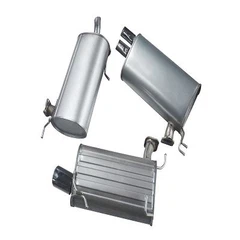
As a leading muffler supplier, we offer a wide range of high-quality mufflers and related products to meet the needs of our customers. Our product portfolio includes Center-rear Mufflers for Sixth Gen Honda CR-V, Rear Muffler for 2013 Nissan Sylphy, and Center Muffler For 2013 Nissan Tiida, among others.
All of our mufflers are designed and manufactured to the highest standards of quality and performance, using the latest technology and materials. We offer a variety of styles and configurations to suit different vehicle models and applications, ensuring that our customers can find the perfect muffler for their needs.
Contact Us for Purchasing and Negotiations
If you're interested in purchasing our mufflers or have any questions about our products, please don't hesitate to contact us. Our team of experienced professionals is always ready to assist you and provide you with the information and support you need. We look forward to working with you and helping you find the perfect muffler solution for your vehicle.
References
- "Automotive Exhaust Systems: Design, Performance, and Emissions Control" by John Heywood
- "The Handbook of Automotive Exhaust Systems" by David Crolla
- "Automotive Exhaust System Components and Design" by SAE International
Send Inquiry