

How does a catalytic converter cone perform in different geographical regions?
Dec 26, 2025
Leave a message
Hey there! I'm a supplier of Catalytic Converter Cones, and I've been getting a lot of questions lately about how these nifty devices perform in different geographical regions. So, I thought I'd dive deep into this topic and share my insights with you all.
Understanding the Catalytic Converter Cone
Before we get into the geographical aspects, let's quickly go over what a Catalytic Converter Cone is. Essentially, it's a crucial part of a vehicle's exhaust system. Its main job is to reduce harmful emissions by converting pollutants like carbon monoxide, nitrogen oxides, and hydrocarbons into less harmful substances such as carbon dioxide, nitrogen, and water vapor. This not only helps in meeting environmental regulations but also makes our air cleaner.
Performance in Urban Areas
Urban regions are known for their heavy traffic, stop - and - go driving conditions, and high population density. In these areas, Catalytic Converter Cones have to work extra hard. The constant starting and stopping of vehicles means that the engine doesn't always reach its optimal operating temperature. Since catalytic converters work best at high temperatures, this can lead to reduced efficiency.
However, modern Catalytic Converter Cones are designed to heat up quickly. They use advanced materials and coatings that can start the conversion process even at relatively low temperatures. But in areas with extremely cold winters, like parts of Canada or Russia, the cold can still pose a challenge. The cold air can cool down the converter faster, and it might take longer to reach its effective operating temperature.
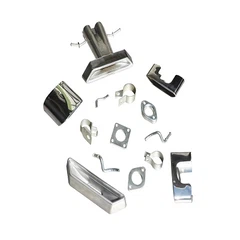
In addition, urban areas often have higher levels of air pollution from various sources, including industrial emissions and other vehicles. This means that the Catalytic Converter Cone has to deal with a higher concentration of pollutants. Over time, this can cause wear and tear on the converter, reducing its lifespan. To combat this, regular maintenance is essential. You might also want to consider using high - quality Muffler Clamp to ensure a proper fit and prevent any leaks in the exhaust system, which can affect the performance of the catalytic converter.
Performance in Rural Areas
Rural regions are quite different from urban areas. There's less traffic, and vehicles tend to drive at a more consistent speed for longer periods. This is actually beneficial for the Catalytic Converter Cone. When the engine runs at a steady speed, it can reach and maintain its optimal operating temperature more easily. As a result, the catalytic converter can perform at its best, effectively reducing emissions.


The air in rural areas is generally cleaner, with fewer pollutants. This means that the Catalytic Converter Cone doesn't have to work as hard to convert harmful substances. As a result, it may have a longer lifespan compared to those used in urban areas. However, rural areas can also have their own challenges. For example, in agricultural regions, there might be dust and debris in the air. If this gets into the exhaust system, it can clog the Catalytic Converter Cone over time.
Another factor to consider is the availability of fuel. In some rural areas, the quality of fuel might not be as high as in urban areas. Low - quality fuel can contain more impurities, which can lead to the build - up of deposits in the catalytic converter. This can reduce its efficiency and eventually cause it to fail. So, it's important to use good - quality fuel and have the exhaust system, including the Muffler Bracket, inspected regularly.
Performance in Mountainous Regions
Mountainous areas present a unique set of challenges for Catalytic Converter Cones. The altitude plays a significant role. At higher altitudes, the air is thinner, which means there's less oxygen available for the engine to burn fuel efficiently. This can lead to incomplete combustion, resulting in higher levels of pollutants being produced.
The Catalytic Converter Cone has to work harder to convert these increased levels of pollutants. Additionally, the steep inclines and declines in mountainous regions can cause the vehicle to change speeds frequently. This can affect the operating temperature of the catalytic converter, similar to the stop - and - go conditions in urban areas.
Moreover, the cold temperatures at high altitudes can also be a problem. Just like in cold urban areas, the converter might take longer to reach its optimal operating temperature. Some vehicles are equipped with altitude - compensating systems to help the engine and catalytic converter perform better in these conditions. But it's still important to keep an eye on the performance of the Catalytic Converter Cone and make sure it's in good working order. You might also want to consider adding a Chrome Tip to the exhaust system, not only for aesthetic reasons but also to protect the end of the exhaust pipe from corrosion in these harsh environments.
Performance in Coastal Regions
Coastal areas have their own distinct characteristics. The salt - laden air in these regions can be corrosive to the Catalytic Converter Cone and other parts of the exhaust system. Salt can cause rust and corrosion, which can weaken the structure of the converter and reduce its performance over time.
The humidity in coastal areas can also be a factor. High humidity can lead to the formation of condensation inside the exhaust system. If this water isn't drained properly, it can cause damage to the Catalytic Converter Cone. To prevent this, it's important to have the exhaust system inspected regularly and to ensure that any drainage holes are clear.
On the positive side, the relatively mild temperatures in many coastal regions can be beneficial for the catalytic converter. It can reach and maintain its optimal operating temperature more easily compared to extremely cold or hot regions.
How to Ensure Optimal Performance
No matter where you are, there are several things you can do to ensure that your Catalytic Converter Cone performs at its best. First and foremost, follow the manufacturer's recommended maintenance schedule. This includes regular inspections, replacing the air filter, and using the right type of fuel.
Keep an eye on your vehicle's performance. If you notice a decrease in fuel efficiency, a strange smell from the exhaust, or a loss of power, it could be a sign that there's a problem with the catalytic converter. Don't ignore these symptoms; have your vehicle checked by a professional as soon as possible.
If you're in an area with specific challenges, such as high altitude, extreme cold, or a corrosive environment, take extra precautions. Consider using additional parts like Muffler Clamp and Muffler Bracket to ensure a secure and well - functioning exhaust system.
Conclusion
As a supplier of Catalytic Converter Cones, I know that these devices face different challenges in various geographical regions. Urban areas with heavy traffic and cold winters, rural areas with dust and variable fuel quality, mountainous regions with altitude and temperature changes, and coastal areas with salt - laden air all require different considerations.
But with proper maintenance and the right precautions, your Catalytic Converter Cone can perform well no matter where you are. If you're in the market for a high - quality Catalytic Converter Cone or any other exhaust system parts, I'd love to have a chat with you. We can discuss your specific needs based on your geographical location and find the best solutions for your vehicle. So, don't hesitate to reach out for a procurement discussion.
References
- Automotive Exhaust Systems: Principles and Design. Publisher: SAE International
- Handbook of Emission Control Technologies for Internal Combustion Engines. Editor: John Heywood
- Environmental Impact of Vehicle Emissions in Different Geographical Zones. Research Paper by Environmental Science Institute
Send Inquiry