

How does an exhaust manifold connect to an exhaust pipe?
Jun 18, 2025
Leave a message
An exhaust manifold and an exhaust pipe are two crucial components in a vehicle's exhaust system. The exhaust manifold is directly connected to the engine's cylinders and collects the exhaust gases expelled from each cylinder. The exhaust pipe, on the other hand, takes these gases from the manifold and routes them out of the vehicle. As an exhaust pipe supplier, I've had in - depth experience and knowledge about how these two parts connect, and I'm eager to share this information with you.
The Basics of Exhaust Manifold and Exhaust Pipe
Before delving into the connection process, it's essential to understand the functions of each part. The exhaust manifold is designed to gather the high - pressure, high - temperature exhaust gases from the engine cylinders. It is usually made of cast iron or stainless steel due to its ability to withstand extreme heat and pressure.
The exhaust pipe, which comes in different shapes and sizes depending on the vehicle model, transports the exhaust gases from the manifold to the tailpipe, where they are finally released into the atmosphere. Along the way, the exhaust pipe may pass through components such as catalytic converters and mufflers to reduce emissions and noise.


Types of Connections
There are mainly three types of connections between an exhaust manifold and an exhaust pipe: flange connection, gasket - based connection, and welded connection.
Flange Connection
Flange connections are the most common type in modern vehicles. A flange is a flat, circular disc with holes around its perimeter. The exhaust manifold and the exhaust pipe each have a flange at the connection point. Bolts are inserted through the holes in the flanges and tightened with nuts. This creates a tight seal that prevents exhaust gas leakage.
The advantage of a flange connection is its ease of installation and removal. It allows for maintenance and replacement of either the manifold or the exhaust pipe without having to cut or weld any parts. For example, when a mechanic needs to replace a damaged exhaust pipe, they can simply loosen the bolts on the flange connection and swap out the old pipe with a new one.
Gasket - Based Connection
In some cases, a gasket is used in conjunction with a flange connection. The gasket is a thin, flexible material, often made of metal, rubber, or a composite. It is placed between the two flanges to provide an additional seal. The gasket fills any small gaps or irregularities between the flanges, ensuring that the exhaust gases do not escape.
Gaskets are especially important in high - performance engines, where the exhaust gases are under higher pressure and temperature. They can withstand the extreme conditions and maintain a tight seal over a long period. However, gaskets may need to be replaced periodically, as they can wear out or become damaged over time.
Welded Connection
Welded connections are less common but are used in some applications, especially in custom - built or high - performance vehicles. In a welded connection, the exhaust manifold and the exhaust pipe are joined together by melting the metal at the connection point and fusing them.
The main advantage of a welded connection is its strength and durability. It creates a permanent and airtight seal that can withstand high pressures and vibrations. However, the downside is that it is difficult to disassemble. If there is a problem with either the manifold or the exhaust pipe, the entire welded assembly may need to be replaced.
Connection Process
The process of connecting an exhaust manifold to an exhaust pipe depends on the type of connection.
For Flange and Gasket - Based Connections
- Prepare the Parts: First, clean the surfaces of the flanges on both the exhaust manifold and the exhaust pipe. Remove any dirt, rust, or old gasket material. Inspect the flanges for any damage or warping. If necessary, use a file or sandpaper to smooth out the surfaces.
- Install the Gasket: If using a gasket, place it carefully between the two flanges, aligning the holes in the gasket with the holes in the flanges.
- Align the Parts: Hold the exhaust pipe in place against the exhaust manifold, making sure the flanges are properly aligned. Insert the bolts through the holes in the flanges and hand - tighten the nuts.
- Tighten the Bolts: Use a torque wrench to tighten the bolts to the manufacturer's specified torque. This ensures that the connection is tight but not over - tightened, which could damage the flanges or the gasket.
For Welded Connections
- Prepare the Parts: Similar to the flange connection, clean the connection surfaces of the exhaust manifold and the exhaust pipe. Make sure the parts are properly aligned and clamped together.
- Weld the Joint: Use a welding machine to create a continuous weld around the connection point. The welder must be experienced and follow proper welding techniques to ensure a strong and leak - free joint.
Importance of a Proper Connection
A proper connection between the exhaust manifold and the exhaust pipe is crucial for several reasons. Firstly, it prevents exhaust gas leakage. Exhaust gases contain harmful substances such as carbon monoxide, nitrogen oxides, and particulate matter. A leak can release these pollutants into the vehicle's cabin or the environment, posing a health risk to passengers and contributing to air pollution.
Secondly, a good connection ensures the efficient operation of the exhaust system. If there is a leak, the backpressure in the exhaust system may be affected, which can reduce engine performance and fuel efficiency.
Our Exhaust Pipe Offerings
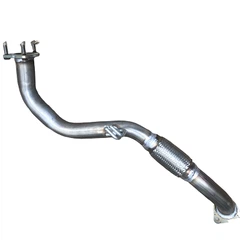
As an exhaust pipe supplier, we offer a wide range of high - quality exhaust pipes for various vehicle models. For example, we have the Front Pipe for Toyota Land Cruise FZJ100, Front Pipe for Honda Odyssey RB3, and Front Pipe for Toyota Coaster RZB54. These pipes are designed to fit perfectly with the corresponding exhaust manifolds, ensuring a proper and reliable connection.
Conclusion
Understanding how an exhaust manifold connects to an exhaust pipe is essential for vehicle owners, mechanics, and anyone interested in automotive engineering. Whether it's a flange, gasket - based, or welded connection, each method has its own advantages and considerations. As an exhaust pipe supplier, we are committed to providing high - quality products that ensure a proper connection and optimal performance of the exhaust system. If you are in need of exhaust pipes or have any questions about the connection process, feel free to contact us for procurement and further discussions.
References
- Heisler, J. (2008). Automotive Exhaust Systems: Design, Construction, and Tuning. SAE International.
- Bosch Automotive Handbook (7th Edition). Robert Bosch GmbH.
Send Inquiry