

How does an exhaust pipe work?
Jul 09, 2025
Leave a message
An exhaust pipe is a crucial component of a vehicle's exhaust system, playing a significant role in ensuring the efficient and safe operation of the engine. As a reputable exhaust pipe supplier, I am excited to delve into the intricacies of how an exhaust pipe works and why it matters.
The Basics of an Exhaust System
Before we focus on the exhaust pipe specifically, it's essential to understand the overall function of the exhaust system. The primary purpose of the exhaust system is to remove the harmful gases produced during the combustion process in the engine and expel them safely out of the vehicle. This process involves several key components, including the exhaust manifold, catalytic converter, muffler, and of course, the exhaust pipe.
The combustion process in an internal combustion engine generates a high - pressure mixture of gases, such as carbon monoxide, hydrocarbons, and nitrogen oxides. These gases are not only harmful to the environment but can also be dangerous to human health. The exhaust system is designed to manage these gases from the engine to the outside world while reducing noise and treating the pollutants.
How an Exhaust Pipe Works
The exhaust pipe serves as a conduit that connects different parts of the exhaust system. It transports the hot and toxic exhaust gases from the exhaust manifold, where the gases first collect after leaving the engine cylinders, to the subsequent components of the exhaust system, such as the catalytic converter and the muffler.
When the engine is running, the pistons in the cylinders move up and down, and during the exhaust stroke, the exhaust valves open, allowing the high - pressure exhaust gases to enter the exhaust manifold. From the exhaust manifold, the gases rush into the exhaust pipe. The design of the exhaust pipe is carefully engineered to ensure a smooth and efficient flow of these gases.
The inner surface of the exhaust pipe is typically smooth to minimize resistance to the gas flow. A smooth surface reduces turbulence, which in turn allows the gases to move more freely through the pipe. This is important because any restriction in the flow can lead to increased back - pressure in the exhaust system. High back - pressure can have a negative impact on engine performance, reducing power output and fuel efficiency.
As the exhaust gases travel through the exhaust pipe, they are also cooled down. The metal of the exhaust pipe dissipates heat from the hot gases to the surrounding air. This cooling process is beneficial for several reasons. Firstly, it helps to protect the other components of the exhaust system, such as the catalytic converter and the muffler, from excessive heat. Secondly, cooler gases are denser, which can further aid in the efficient operation of the exhaust system.
Different Types of Exhaust Pipes
There are various types of exhaust pipes available, each designed for specific applications and vehicle models.
Front Pipes
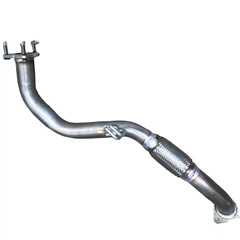
Front pipes are an important part of the exhaust system, connecting the exhaust manifold to the catalytic converter. They are often customized to fit different vehicle makes and models. For example, we offer a Front Pipe for 10th Gen Honda Accord that is precisely engineered to match the specifications of the 10th - generation Honda Accord. This ensures a perfect fit and optimal performance for this particular vehicle.
Another example is the Front Pipe for Nissan X - Trail 2.5L. This front pipe is designed to work seamlessly with the Nissan X - Trail 2.5L engine, providing a reliable and efficient connection between the exhaust manifold and the catalytic converter.
Intermediate Pipes
Intermediate pipes are used to connect different sections of the exhaust system, such as between the catalytic converter and the muffler. For instance, our Intermediate Pipe for 2015 Toyota Corolla is specifically made for the 2015 Toyota Corolla. It ensures that the exhaust gases can flow smoothly from the catalytic converter to the muffler, maintaining the overall performance of the exhaust system.
The Role of Exhaust Pipe in Emission Control
The exhaust pipe also plays a role in emission control. After the exhaust gases leave the engine and enter the exhaust pipe, they are directed to the catalytic converter. The catalytic converter is a key component in reducing harmful emissions. It uses catalysts to convert carbon monoxide into carbon dioxide, hydrocarbons into carbon dioxide and water, and nitrogen oxides into nitrogen and oxygen.
The exhaust pipe ensures that the exhaust gases reach the catalytic converter in a timely and efficient manner. A well - designed exhaust pipe can help to optimize the performance of the catalytic converter by delivering the gases at the right temperature and flow rate. If the exhaust pipe is damaged or has a blockage, it can disrupt the proper functioning of the catalytic converter, leading to increased emissions.
The Impact of Exhaust Pipe on Noise Reduction
In addition to transporting exhaust gases and aiding in emission control, the exhaust pipe also contributes to noise reduction. The exhaust gases exiting the engine at high pressure and velocity create a loud noise. The exhaust pipe, along with the muffler, helps to dampen this noise.
The muffler uses a series of chambers and baffles to reflect and cancel out sound waves. The exhaust pipe plays a role in directing the exhaust gases into the muffler in a way that maximizes the noise - reducing effect. A properly designed exhaust pipe can ensure that the gases enter the muffler evenly, allowing the muffler to work more effectively in reducing the noise level of the exhaust system.
Maintenance of Exhaust Pipes
To ensure the proper functioning of the exhaust pipe and the entire exhaust system, regular maintenance is essential. Over time, the exhaust pipe can be subject to wear and tear due to exposure to high temperatures, corrosive exhaust gases, and road debris.
One of the common issues with exhaust pipes is corrosion. The hot and moist exhaust gases can cause the metal of the exhaust pipe to rust, especially in areas where road salt is used during the winter. Regular inspections can help to detect early signs of corrosion. If corrosion is detected, it may be necessary to replace the affected section of the exhaust pipe to prevent further damage.
Another important aspect of maintenance is checking for leaks. A leak in the exhaust pipe can not only lead to increased noise but also allow harmful exhaust gases to enter the vehicle cabin. Any signs of leaks, such as a hissing sound or a strong smell of exhaust fumes, should be addressed immediately.
Why Choose Our Exhaust Pipes
As a leading exhaust pipe supplier, we take pride in offering high - quality exhaust pipes that are designed to meet the specific needs of different vehicles. Our exhaust pipes are made from high - grade materials that are resistant to corrosion and heat. We use advanced manufacturing techniques to ensure precise dimensions and a perfect fit for each vehicle model.
Our team of experts has extensive knowledge and experience in the automotive industry. We understand the importance of a well - functioning exhaust system for vehicle performance and safety. That's why we are committed to providing exhaust pipes that are not only reliable but also contribute to the overall efficiency and environmental friendliness of the vehicle.
If you are in the market for exhaust pipes for your vehicle, whether it's a front pipe, an intermediate pipe, or any other type of exhaust pipe, we invite you to contact us for procurement and further discussion. We are confident that our products will meet your expectations and help you maintain the optimal performance of your vehicle's exhaust system.
Conclusion
In conclusion, the exhaust pipe is a vital part of a vehicle's exhaust system. It plays a crucial role in transporting exhaust gases, ensuring efficient engine performance, reducing emissions, and minimizing noise. By understanding how an exhaust pipe works and the importance of proper maintenance, vehicle owners can keep their engines running smoothly and safely.
If you have any questions or are interested in purchasing exhaust pipes, please feel free to reach out to us. We look forward to serving you and providing you with the best exhaust pipe solutions for your vehicles.


References
- "Automotive Exhaust Systems: Design, Performance, and Testing" by Jack Croll.
- "Fundamentals of Vehicle Dynamics" by Thomas D. Gillespie.
- Various automotive engineering textbooks and industry publications on exhaust system design and function.
Send Inquiry