

Is it safe to weld a muffler clamp?
Jun 04, 2025
Leave a message
Is it safe to weld a muffler clamp? This is a question that often arises among automotive enthusiasts, mechanics, and DIYers. As a supplier of muffler clamps, I've seen firsthand the various approaches people take when it comes to installing and maintaining these crucial components of the exhaust system. In this blog post, I'll delve into the safety aspects of welding a muffler clamp, exploring the pros and cons, best practices, and alternative solutions.


Understanding the Role of Muffler Clamps
Before we discuss the safety of welding muffler clamps, it's important to understand their function. Muffler clamps are used to secure different parts of the exhaust system together, such as the muffler, pipes, and Manifold Outlet. They provide a tight seal that prevents exhaust gases from leaking, which is not only important for the performance of the vehicle but also for the safety of the passengers. A loose or faulty muffler clamp can lead to exhaust leaks, which can cause a variety of problems, including reduced engine performance, increased emissions, and potential health hazards due to the release of toxic gases such as carbon monoxide.
The Case for Welding Muffler Clamps
There are several reasons why someone might consider welding a muffler clamp. One of the main advantages of welding is that it creates a permanent and extremely strong bond between the clamp and the exhaust components. This can be particularly beneficial in high-stress applications or in situations where the clamp is likely to experience a lot of vibration or movement. Welding can also provide a more secure seal, reducing the risk of exhaust leaks.
Another advantage of welding is that it can be a cost-effective solution in the long run. While the initial cost of welding equipment and the labor involved may be higher than simply using a standard clamp, a welded clamp is less likely to need replacement or maintenance over time. This can save money in the long term, especially for vehicles that are used frequently or for heavy-duty applications.
The Risks of Welding Muffler Clamps
However, welding a muffler clamp is not without its risks. One of the main concerns is the potential for damage to the exhaust components. Welding generates a significant amount of heat, which can cause the metal to warp or crack if not done correctly. This can lead to a weakened exhaust system and an increased risk of leaks.
Another risk is the release of toxic fumes. Exhaust systems are made of various metals and alloys, some of which can release harmful fumes when heated during the welding process. These fumes can be dangerous to inhale and can cause respiratory problems, skin irritation, and other health issues. It's essential to take proper safety precautions, such as wearing a respirator and working in a well-ventilated area, when welding a muffler clamp.
In addition, welding a muffler clamp may void the warranty of the exhaust components. Many manufacturers specify that welding is not allowed on their products, as it can affect the integrity and performance of the exhaust system. Before deciding to weld a muffler clamp, it's important to check the warranty information and consult with the manufacturer if necessary.
Best Practices for Welding Muffler Clamps
If you decide to weld a muffler clamp, it's crucial to follow best practices to ensure safety and a successful outcome. Here are some tips:
- Prepare the surface: Clean the area where the clamp will be welded thoroughly to remove any dirt, grease, or rust. This will ensure a strong bond between the clamp and the exhaust components.
- Use the right equipment: Choose a welding machine that is suitable for the type of metal you are working with. For most exhaust systems, a MIG or TIG welder is recommended. Make sure to use the correct welding wire or rod and set the appropriate welding parameters.
- Take your time: Welding is a precise process that requires patience and attention to detail. Take your time to ensure that the weld is even and strong. Avoid overheating the metal, as this can cause damage.
- Wear protective gear: Always wear a welding helmet, gloves, and a respirator to protect yourself from the heat, sparks, and fumes generated during the welding process.
- Inspect the weld: After welding, inspect the weld carefully to ensure that it is strong and free of defects. Look for any signs of cracking, porosity, or incomplete fusion. If you are not satisfied with the quality of the weld, it's best to start over or seek professional help.
Alternative Solutions to Welding
If you are not comfortable welding a muffler clamp or if welding is not an option due to warranty restrictions or other reasons, there are alternative solutions available. One option is to use high-quality muffler clamps that are designed to provide a secure and leak-free connection. These clamps typically feature a strong locking mechanism and are made of durable materials that can withstand the high temperatures and vibrations of the exhaust system.
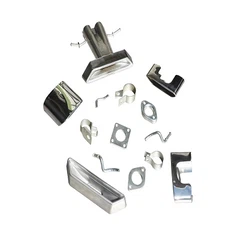
Another option is to use Custom Exhaust Metal Flange or Muffler Bracket to secure the exhaust components. These components can provide a more stable and reliable connection than a standard clamp and can be easier to install and remove if necessary.
Conclusion
In conclusion, welding a muffler clamp can be a safe and effective solution in certain situations, but it also comes with risks. Before deciding to weld a muffler clamp, it's important to weigh the pros and cons and consider alternative solutions. If you do choose to weld, make sure to follow best practices and take the necessary safety precautions.
As a supplier of muffler clamps, I understand the importance of providing high-quality products that meet the needs of our customers. We offer a wide range of muffler clamps, as well as other exhaust components such as Manifold Outlet, Custom Exhaust Metal Flange, and Muffler Bracket. If you have any questions or need assistance with your exhaust system, please don't hesitate to contact us. We are here to help you find the right solutions for your automotive needs.
References
- Automotive Welding Handbook, Second Edition, by John R. Walker
- Exhaust System Design and Tuning, by David Vizard
- Welding Safety Guide, published by the American Welding Society
Send Inquiry