

What are the different types of mufflers?
Jun 23, 2025
Leave a message
Mufflers play a crucial role in a vehicle's exhaust system. As a seasoned muffler supplier, I've had the privilege of working with a wide variety of mufflers, each designed to serve specific functions and meet different customer needs. In this blog post, I'll delve into the different types of mufflers available in the market and provide insights into their unique features and applications.
Reactive Mufflers
Reactive mufflers are one of the most common types of mufflers used in vehicles. They work on the principle of sound wave interference to reduce noise. These mufflers typically consist of a series of chambers and tubes that are designed to reflect and cancel out sound waves.
The basic design of a reactive muffler involves a series of expansion chambers. When the exhaust gases enter the muffler, they expand into these chambers, causing the sound waves to slow down and change direction. As the sound waves bounce off the walls of the chambers, they interfere with each other, resulting in a reduction in noise.
One of the advantages of reactive mufflers is their simplicity and durability. They are relatively easy to manufacture and have a long lifespan. Reactive mufflers are also effective at reducing low-frequency noise, making them suitable for a wide range of vehicles, including cars, trucks, and motorcycles.
However, reactive mufflers may not be as effective at reducing high-frequency noise. In some cases, they may also cause a slight reduction in engine performance due to the backpressure created by the expansion chambers.
Absorptive Mufflers
Absorptive mufflers, also known as dissipative mufflers, use sound-absorbing materials to reduce noise. These mufflers typically consist of a perforated tube surrounded by a layer of sound-absorbing material, such as fiberglass or steel wool.
When the exhaust gases pass through the perforated tube, the sound waves are absorbed by the sound-absorbing material. The material converts the sound energy into heat energy, which is then dissipated into the surrounding environment.
Absorptive mufflers are particularly effective at reducing high-frequency noise. They are often used in applications where a high level of noise reduction is required, such as in racing cars and high-performance vehicles.
One of the advantages of absorptive mufflers is their ability to provide a high level of noise reduction without causing a significant reduction in engine performance. However, they may be more expensive to manufacture than reactive mufflers and may require more maintenance due to the need to replace the sound-absorbing material over time.


Combination Mufflers
Combination mufflers, as the name suggests, combine the features of both reactive and absorptive mufflers. These mufflers typically consist of a series of expansion chambers and a layer of sound-absorbing material.
The expansion chambers in a combination muffler work to reduce low-frequency noise, while the sound-absorbing material helps to reduce high-frequency noise. This combination of technologies allows combination mufflers to provide a high level of noise reduction across a wide range of frequencies.
Combination mufflers are often used in vehicles where a balance between noise reduction and engine performance is required. They are suitable for a wide range of applications, including cars, trucks, and SUVs.
Performance Mufflers
Performance mufflers are designed to improve engine performance while also reducing noise. These mufflers typically have a larger diameter and a more straight-through design than traditional mufflers, which allows the exhaust gases to flow more freely.
By reducing the backpressure in the exhaust system, performance mufflers can increase engine power and torque. They can also improve fuel efficiency by allowing the engine to breathe more easily.
In addition to improving performance, performance mufflers are also designed to provide a more aggressive exhaust note. They are often used in sports cars and high-performance vehicles to enhance the driving experience.
However, it's important to note that not all performance mufflers are created equal. Some mufflers may provide a significant increase in performance, while others may only provide a slight improvement. It's important to choose a performance muffler that is specifically designed for your vehicle and driving style.
Specialty Mufflers
In addition to the standard types of mufflers, there are also a number of specialty mufflers available in the market. These mufflers are designed to meet specific needs and applications.
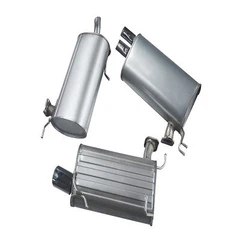
One example of a specialty muffler is the Center Muffler for 2003 - 2015 Mitsubishi Lancer. This muffler is specifically designed for the Mitsubishi Lancer models produced between 2003 and 2015. It is engineered to provide a perfect fit and optimal performance for this particular vehicle.
Another example is the Center Muffler for Honda Odyssey RA6. This muffler is designed for the Honda Odyssey RA6 model and is tailored to meet the unique requirements of this vehicle.
The Center - rear Mufflers for Nissan Qashqai 2.0L is yet another specialty muffler. It is designed for the Nissan Qashqai 2.0L, ensuring a proper fit and efficient operation.
Specialty mufflers are often designed with the specific characteristics of a particular vehicle in mind. They may offer improved performance, better noise reduction, or a more customized look compared to standard mufflers.
Choosing the Right Muffler
When choosing a muffler for your vehicle, there are several factors to consider. First and foremost, you need to consider the type of vehicle you have and its intended use. For example, if you have a high - performance sports car, you may want to choose a performance muffler that can enhance engine power and provide an aggressive exhaust note. On the other hand, if you have a family sedan, you may prioritize noise reduction and fuel efficiency.
You also need to consider the local noise regulations. In some areas, there are strict laws regarding the level of noise that a vehicle can produce. Make sure to choose a muffler that complies with these regulations.
Another important factor is the quality and durability of the muffler. Look for a muffler that is made from high - quality materials and has a good reputation for reliability. A well - made muffler will last longer and provide better performance over time.
Conclusion
As a muffler supplier, I understand the importance of choosing the right muffler for your vehicle. With so many different types of mufflers available in the market, it can be challenging to make the right decision. However, by understanding the different types of mufflers and their features, you can make an informed choice that meets your specific needs and preferences.
If you're in the market for a new muffler, I encourage you to reach out to us. Our team of experts can help you select the perfect muffler for your vehicle and provide you with all the information you need to make a confident purchase. Whether you're looking for a standard muffler, a performance muffler, or a specialty muffler, we have the products and expertise to meet your requirements. Contact us today to start the conversation and explore our wide range of muffler options.
References
- "Automotive Exhaust Systems: Design and Performance" by David Crolla
- "Vehicle Noise and Vibration Refinement" by Michael A. Blaxill
- Various automotive industry publications and technical resources.
Send Inquiry