

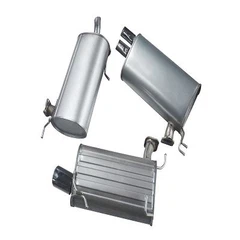
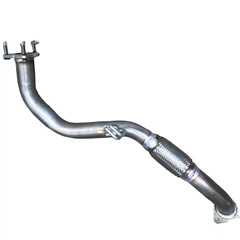
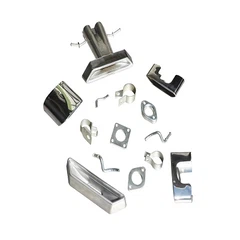
What is the pressure drop across the rear muffler for Hyundai IX35?
May 12, 2025
Leave a message
What is the Pressure Drop across the Rear Muffler for Hyundai IX35?
As a supplier of rear mufflers for the Hyundai IX35, I often encounter inquiries from customers regarding the pressure drop across these crucial automotive components. Understanding the concept of pressure drop in the context of a rear muffler is essential for both automotive enthusiasts and industry professionals alike. In this blog post, I will delve into the intricacies of pressure drop across the rear muffler for the Hyundai IX35, exploring its significance, factors influencing it, and how it impacts the overall performance of the vehicle.

Understanding Pressure Drop
Pressure drop refers to the decrease in pressure that occurs as a fluid (in this case, exhaust gases) flows through a pipe or a component, such as a muffler. In the context of a rear muffler, the exhaust gases enter the muffler at a certain pressure and exit at a lower pressure. This reduction in pressure is a result of various factors, including friction, turbulence, and the design of the muffler itself.

The pressure drop across the rear muffler is an important parameter as it directly affects the engine's performance. A high-pressure drop can impede the flow of exhaust gases, leading to increased backpressure. Backpressure is the resistance that the engine must overcome to expel exhaust gases from the combustion chamber. When backpressure is too high, it can cause a decrease in engine power, reduced fuel efficiency, and increased emissions. On the other hand, a low-pressure drop may result in insufficient noise attenuation, leading to a louder exhaust note.
Factors Influencing Pressure Drop in the Rear Muffler for Hyundai IX35
Several factors influence the pressure drop across the rear muffler for the Hyundai IX35. These factors can be broadly categorized into design-related factors and operating conditions.
Design-Related Factors
- Muffler Geometry: The shape and size of the muffler play a significant role in determining the pressure drop. Mufflers with complex internal geometries, such as multiple chambers and baffles, tend to have higher pressure drops compared to simpler designs. This is because the exhaust gases encounter more obstacles and changes in direction, resulting in increased friction and turbulence.
- Inlet and Outlet Sizes: The sizes of the inlet and outlet pipes of the muffler also affect the pressure drop. A smaller inlet or outlet diameter can restrict the flow of exhaust gases, leading to a higher pressure drop. Conversely, larger diameters can reduce the pressure drop but may also affect the noise attenuation characteristics of the muffler.
- Internal Structure: The internal structure of the muffler, including the presence of perforated tubes, sound-absorbing materials, and resonators, can influence the pressure drop. Perforated tubes allow the exhaust gases to pass through small holes, which can increase turbulence and pressure drop. Sound-absorbing materials, such as fiberglass or steel wool, can also contribute to the pressure drop by providing resistance to the flow of exhaust gases.
Operating Conditions
- Engine Speed and Load: The pressure drop across the rear muffler varies with engine speed and load. At higher engine speeds and loads, the volume and velocity of the exhaust gases increase, resulting in a higher pressure drop. This is because the engine is producing more exhaust gases, and the muffler must handle a greater flow rate.
- Exhaust Gas Temperature: The temperature of the exhaust gases also affects the pressure drop. Hotter exhaust gases have a lower density, which can reduce the pressure drop. However, high temperatures can also cause the internal components of the muffler to expand, potentially increasing the pressure drop.
- Exhaust Gas Composition: The composition of the exhaust gases, including the presence of particulate matter and pollutants, can influence the pressure drop. Particulate matter can accumulate inside the muffler, reducing the flow area and increasing the pressure drop over time.
Measuring Pressure Drop in the Rear Muffler for Hyundai IX35
Measuring the pressure drop across the rear muffler for the Hyundai IX35 requires specialized equipment, such as pressure sensors and a differential pressure gauge. The pressure sensors are typically installed at the inlet and outlet of the muffler to measure the pressure before and after the exhaust gases pass through the muffler. The differential pressure gauge then calculates the difference in pressure between the two points, providing a measurement of the pressure drop.
In a real-world scenario, measuring the pressure drop across the rear muffler can be challenging due to the high temperatures and harsh operating conditions of the exhaust system. However, automotive manufacturers and researchers often conduct laboratory tests to accurately measure the pressure drop under controlled conditions. These tests can provide valuable insights into the performance of the muffler and help optimize its design for minimal pressure drop while maintaining effective noise attenuation.
Impact of Pressure Drop on the Performance of Hyundai IX35
The pressure drop across the rear muffler can have a significant impact on the performance of the Hyundai IX35. As mentioned earlier, a high-pressure drop can lead to increased backpressure, which can negatively affect the engine's power output and fuel efficiency. When the engine has to work harder to overcome the backpressure, it consumes more fuel and produces less power. This can result in a decrease in acceleration, reduced top speed, and increased fuel consumption.
In addition to affecting the engine's performance, a high-pressure drop can also cause premature wear and tear on the engine and exhaust system components. The increased backpressure can put additional stress on the exhaust valves, pistons, and other engine parts, leading to reduced reliability and durability. It can also cause the exhaust system to overheat, potentially damaging the catalytic converter and other components.
On the other hand, a low-pressure drop can result in a louder exhaust note, which may not be desirable for some drivers. While a certain level of exhaust noise can enhance the driving experience, excessive noise can be a nuisance and may violate local noise regulations. Therefore, it is important to strike a balance between minimizing the pressure drop and maintaining an acceptable level of noise attenuation.
Our Rear Mufflers for Hyundai IX35
As a supplier of rear mufflers for the Hyundai IX35, we understand the importance of optimizing the pressure drop while ensuring effective noise reduction. Our rear mufflers are designed using advanced engineering techniques and high-quality materials to minimize the pressure drop and maximize the performance of the vehicle.
We offer a range of rear mufflers for the Hyundai IX35, each tailored to meet the specific needs and preferences of our customers. Our mufflers are available in different designs and configurations, including straight-through, chambered, and hybrid designs. These designs are carefully engineered to provide the best balance between pressure drop and noise attenuation, ensuring optimal performance and a quiet, comfortable driving experience.

In addition to our standard rear mufflers, we also offer custom solutions for customers who require a more personalized approach. Our team of experienced engineers and technicians can work with you to design and manufacture a rear muffler that meets your exact specifications and requirements. Whether you are looking for a high-performance muffler for racing applications or a quiet, efficient muffler for daily driving, we have the expertise and resources to deliver a solution that exceeds your expectations.
Related Products
If you are interested in other automotive mufflers, we also offer a wide range of products for different makes and models. Some of our popular products include: - Center-rear Mufflers for Nissan X-Trail 2.5L: These mufflers are designed specifically for the Nissan X-Trail 2.5L, providing excellent noise reduction and performance. - Rear Muffler for 2018 Toyota Camry: Our rear muffler for the 2018 Toyota Camry is engineered to meet the highest standards of quality and performance, ensuring a quiet and efficient driving experience. - Center-rear Mufflers for Nissan Qashqai 2.0L: These mufflers are designed to fit the Nissan Qashqai 2.0L, offering superior noise attenuation and improved exhaust flow.
Contact Us for Purchase and Negotiation
If you are interested in purchasing our rear mufflers for the Hyundai IX35 or any of our other products, we invite you to contact us for more information and to discuss your specific requirements. Our sales team is dedicated to providing you with the best possible service and support, and we will work with you to find the perfect solution for your needs.
Whether you are an automotive enthusiast looking to upgrade your vehicle's exhaust system or a professional installer or distributor, we welcome the opportunity to partner with you. Contact us today to start the conversation and take the first step towards enhancing the performance and sound of your Hyundai IX35.
References
- Heywood, J. B. (1988). Internal Combustion Engine Fundamentals. McGraw-Hill.
- Crolla, D. A. (2001). Automotive Chassis Engineering: Principles and Analysis. SAE International.
- Watson, N., & Janota, M. S. (1982). Turbocharging the Internal Combustion Engine. John Wiley & Sons.
Send Inquiry