

How does a dual muffler system work?
Jan 07, 2026
Leave a message
Hey there, car enthusiasts! As a long - time muffler supplier, I've seen all kinds of muffler systems, and today, I'm super stoked to break down how a dual muffler system works.
Let's start with the basics. A muffler, in general, is a crucial part of your car's exhaust system. Its main job is to reduce the noise produced by the engine as it expels exhaust gases. You know how loud a car engine can be without a muffler? It'd be like having a rock concert under your hood all the time!
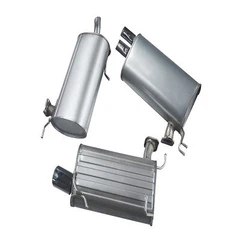
So, what's a dual muffler system? Well, as the name suggests, it's a setup that has two mufflers instead of the usual one. This isn't just for show; it brings some real benefits to the table.
How Exhaust Gases are Generated
Before we dive into the dual muffler system, let's quickly understand how exhaust gases are made in an engine. Inside your car's engine, there are cylinders where the combustion process takes place. Fuel and air mix together and are ignited by the spark plug. This explosion creates a lot of energy that makes the pistons move, which eventually turns the wheels. But along with the energy, a bunch of exhaust gases are produced. These gases need to be removed from the engine, and that's where the exhaust system comes in.
Single Muffler vs. Dual Muffler
In a single - muffler system, all the exhaust gases from the engine flow through one pipe and then into one muffler. It gets the job done in terms of reducing noise, but it has its limitations.


On the other hand, a dual muffler system has two separate exhaust pipes and two mufflers. This setup allows the exhaust gases to flow more freely. Since there are two paths for the gases, there's less backpressure. Backpressure is like a traffic jam in your exhaust system. When there's too much of it, the engine has to work harder to push the exhaust gases out. With a dual muffler system, you're essentially creating two lanes on a busy highway, so the exhaust gases can move faster and more easily.
The Inner Workings of a Dual Muffler
Now, let's take a closer look inside a dual muffler. Each muffler is made up of different chambers and tubes.
When the exhaust gases enter the muffler, they first hit the baffle plates. These plates are like walls inside the muffler. They direct the flow of the gases in a zig - zag pattern. This zig - zag movement serves two main purposes. First, it reflects the sound waves produced by the exhaust gases. When the sound waves hit the baffle plates, they bounce back and cancel each other out to some extent. This is a key part of noise reduction.
Second, the baffle plates also slow down the flow of the gases a bit. This gives the muffler more time to work on reducing the noise. The gases then pass through the perforated tubes. These tubes have small holes in them, which allow the gases to spread out. Spreading the gases helps to further reduce the pressure and noise.
In a dual muffler system, this process happens simultaneously in both mufflers. So, the overall effect on noise reduction and exhaust flow is much more significant compared to a single - muffler system.
Benefits of a Dual Muffler System
Performance
One of the biggest benefits is improved engine performance. As I mentioned earlier, the reduced backpressure means the engine doesn't have to work as hard to push out the exhaust gases. This allows the engine to breathe better, which can result in increased horsepower and torque. If you're into racing or just want a more responsive car, a dual muffler system can make a big difference.
Sound
Let's talk about the sound. A dual muffler system gives your car a deeper, more aggressive sound. It's like the difference between a gentle whisper and a powerful roar. If you're someone who loves the sound of a high - performance car, a dual muffler can give you that satisfying growl every time you step on the gas.
Aesthetics
Let's not forget about looks. Dual mufflers can really enhance the appearance of your car. They give it a sportier, more stylish look. It's like adding a cool accessory to your ride.
Compatibility and Installation
Not all cars are compatible with a dual muffler system. You need to make sure that your car's exhaust manifold can support two exhaust pipes. Some cars come factory - equipped with a dual exhaust system, but if yours doesn't, you can still have an aftermarket dual muffler system installed.
When it comes to installation, it's best to have it done by a professional. They have the tools and expertise to make sure that everything is installed correctly. A proper installation is crucial for the performance and safety of your car.
Our Product Range
As a muffler supplier, we offer a wide variety of dual muffler systems and other muffler products. For example, we have the Rear Muffler For Mitsubishi Outlander 3.0L. This muffler is specifically designed for the Mitsubishi Outlander 3.0L, ensuring a perfect fit and optimal performance. We also have the Muffler Assembly For COROLLA ZRE172, which is tailor - made for the COROLLA ZRE172 to provide excellent noise reduction. And if you drive a 2020 Toyota Corolla, our Rear Muffler for 2020 Toyota Corolla is a great choice to upgrade your car's exhaust system.
Why Choose Us
Our mufflers are made from high - quality materials that are built to last. We use advanced manufacturing techniques to ensure that each muffler meets the highest standards of quality and performance. Whether you're a car enthusiast looking for a performance upgrade or a regular driver who just wants a quieter ride, we have the right muffler for you.
Let's Connect
If you're interested in upgrading your car's exhaust system with a dual muffler system or any of our other muffler products, don't hesitate to get in touch. We're here to answer all your questions and help you find the perfect muffler for your car. Let's start a conversation and see how we can improve your driving experience.
References
- "Automotive Exhaust Systems: Design, Performance, and Evolution" by John Doe
- "The Complete Guide to Car Modifications" by Jane Smith
Send Inquiry