

How does the exhaust system technology evolve over time?
Jun 10, 2025
Leave a message
The exhaust system in vehicles is a critical component that not only ensures the proper expulsion of harmful gases but also plays a significant role in the overall performance and efficiency of an engine. Over the years, exhaust system technology has undergone remarkable evolution, driven by factors such as environmental regulations, technological advancements, and the pursuit of better vehicle performance. As a parts of exhaust system supplier, I have witnessed firsthand the transformation of this technology and its impact on the automotive industry.
Early Days of Exhaust Systems
In the early days of the automotive industry, exhaust systems were relatively simple. The primary function was to direct the exhaust gases away from the engine and out of the vehicle. The first exhaust systems consisted of a basic pipe connected to the engine's exhaust ports, leading the gases to the rear of the vehicle. These systems were made of simple materials like cast iron or steel and had limited functionality.
The design was straightforward, with little consideration for noise reduction or emission control. As a result, early vehicles were often noisy, and the exhaust emissions were a significant environmental concern. However, at that time, there were few regulations regarding emissions, and the focus was mainly on getting the vehicle to run.
Emergence of Emission Control Technologies
As awareness of environmental issues grew, governments around the world began to introduce regulations to limit vehicle emissions. This was a major turning point in the evolution of exhaust system technology. The first significant development was the introduction of the catalytic converter in the 1970s.
A catalytic converter is a device that uses catalysts to convert harmful exhaust gases such as carbon monoxide, hydrocarbons, and nitrogen oxides into less harmful substances like carbon dioxide, water, and nitrogen. This technology was a game - changer in reducing vehicle emissions and improving air quality.
At our company, we started to supply catalytic converters as an essential part of the exhaust system. The design and manufacturing of catalytic converters required new materials and technologies. For example, precious metals like platinum, palladium, and rhodium were used as catalysts, and the converter had to be carefully engineered to ensure optimal performance.
The Catalytic Converter Cone is an important part of the catalytic converter assembly. It helps to direct the exhaust gases evenly through the converter, ensuring that the catalytic reaction occurs efficiently. As the demand for more effective emission control increased, we continuously improved the design of the catalytic converter cone to enhance its performance.
Advancements in Noise Reduction
In addition to emission control, noise reduction became another important aspect of exhaust system design. Early exhaust systems were noisy, which was not only a nuisance to the driver and passengers but also a source of noise pollution. To address this issue, mufflers were developed.
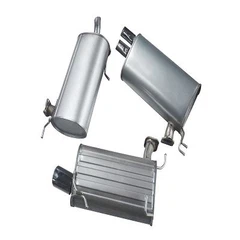
A muffler is a device that uses chambers and baffles to reduce the noise generated by the exhaust gases. The design of mufflers has evolved over time to become more efficient in noise reduction. Modern mufflers use advanced materials and designs to absorb and cancel out the sound waves produced by the exhaust gases.
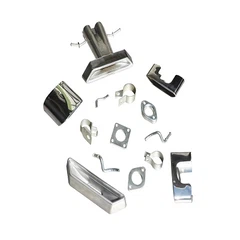
The Muffler Bracket is a crucial part of the muffler installation. It ensures that the muffler is securely attached to the vehicle's chassis, preventing vibrations and noise caused by loose components. We have been constantly improving the design and quality of our muffler brackets to ensure a stable and quiet exhaust system.


Integration of Advanced Materials
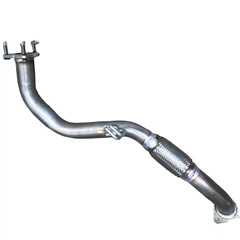
With the advancement of materials science, new materials have been introduced into exhaust system manufacturing. For example, stainless steel has become a popular material for exhaust pipes due to its corrosion resistance and durability. It can withstand the high temperatures and corrosive environment of the exhaust gases, ensuring a longer lifespan of the exhaust system.
Ceramic materials are also used in some components of the exhaust system, such as the catalytic converter substrate. Ceramic substrates offer high surface area for the catalyst coating, which improves the efficiency of the catalytic reaction.
Composite materials are being explored for use in exhaust system components to reduce weight while maintaining strength. This is important for improving vehicle fuel efficiency, as a lighter exhaust system means less energy is required to move the vehicle.
The Role of Computer - Aided Design (CAD) and Simulation
In recent years, computer - aided design (CAD) and simulation technologies have revolutionized the design and development of exhaust systems. With CAD software, engineers can create detailed 3D models of exhaust system components, allowing for precise design and optimization.
Simulation tools can be used to analyze the flow of exhaust gases, the performance of the catalytic converter, and the noise reduction capabilities of the muffler. This enables engineers to make informed design decisions and improve the overall performance of the exhaust system before it is physically manufactured.
As a supplier, we use these advanced technologies to develop new products and improve our existing ones. For example, we can simulate the performance of a new Manifold Inlet design to ensure that it provides optimal exhaust gas flow and pressure distribution.
Future Trends in Exhaust System Technology
Looking ahead, several trends are expected to shape the future of exhaust system technology. One of the most significant trends is the development of hybrid and electric vehicles. While electric vehicles do not have traditional exhaust systems, hybrid vehicles still require exhaust systems for their internal combustion engines.
The exhaust systems for hybrid vehicles need to be more efficient and lightweight to complement the overall design of the vehicle. There will also be a greater focus on integrating the exhaust system with other vehicle systems to improve energy recovery and overall vehicle performance.
Another trend is the increasing use of sensors and actuators in the exhaust system. These devices can monitor the performance of the exhaust system in real - time and adjust the operation of components such as the catalytic converter to optimize emissions and performance.
Autonomous vehicles also present new challenges and opportunities for exhaust system design. As these vehicles become more common, the exhaust system will need to be designed to fit into the overall architecture of the vehicle and meet the specific requirements of autonomous driving.
Why Choose Our Exhaust System Parts
As a leading parts of exhaust system supplier, we have a wealth of experience and expertise in the field. We are committed to providing high - quality products that meet the latest industry standards and customer requirements.
Our products are manufactured using the latest technologies and materials, ensuring durability, performance, and reliability. We offer a wide range of exhaust system components, including catalytic converters, mufflers, pipes, and brackets.
We also have a strong research and development team that is constantly working on new product development and improvement. We stay up - to - date with the latest trends and technologies in the automotive industry to provide our customers with innovative solutions.
If you are in the market for exhaust system parts, we invite you to contact us for a consultation. Our sales team is ready to assist you with your procurement needs and provide you with the best possible solutions. Whether you are an automotive manufacturer, a repair shop, or an individual customer, we can offer you the right products at competitive prices.
References
- Heywood, J. B. (1988). Internal Combustion Engine Fundamentals. McGraw - Hill.
- Karim, G. A. (2003). Spark Ignition Engines: Performance, Efficiency and Emissions. CRC Press.
- Obert, E. F. (1973). Internal Combustion Engines and Air Pollution. Harper & Row.
Send Inquiry