

What is the impact of a manifold inlet on engine emissions?
May 21, 2025
Leave a message
In the dynamic world of automotive engineering, the quest for cleaner and more efficient engines is a never - ending journey. As a leading supplier of Manifold Inlet, I've witnessed firsthand how this seemingly simple component can have a profound impact on engine emissions. In this blog, we'll explore the intricate relationship between the manifold inlet and engine emissions, delving into the science, the real - world implications, and the role our products play in this critical area.
Understanding the Manifold Inlet
Before we can discuss its impact on emissions, it's essential to understand what a manifold inlet is and how it functions. The manifold inlet is a crucial part of the engine's intake system. Its primary role is to distribute the air - fuel mixture evenly to each cylinder of the engine. This even distribution is vital for the engine to operate efficiently. When the air - fuel mixture is not properly distributed, some cylinders may receive too much fuel while others get too little. This imbalance can lead to incomplete combustion, which is a major contributor to increased emissions.
The Science Behind Emissions and the Manifold Inlet
Engine emissions are primarily composed of pollutants such as carbon monoxide (CO), hydrocarbons (HC), and nitrogen oxides (NOx). These pollutants are produced during the combustion process in the engine. A well - designed Manifold Inlet can significantly reduce the production of these pollutants by ensuring a more complete and efficient combustion process.
Impact on Carbon Monoxide (CO)
Carbon monoxide is a colorless and odorless gas that is produced when there is insufficient oxygen during combustion. In an engine, if the air - fuel mixture is too rich (i.e., there is too much fuel relative to the amount of air), carbon monoxide is more likely to be produced. A properly functioning manifold inlet helps to maintain the correct air - fuel ratio by evenly distributing the mixture to all cylinders. This ensures that there is enough oxygen available for complete combustion, thereby reducing the production of carbon monoxide.
Impact on Hydrocarbons (HC)
Hydrocarbons are unburned fuel molecules that are released into the atmosphere. Incomplete combustion is the main cause of hydrocarbon emissions. When the air - fuel mixture is not evenly distributed, some parts of the mixture may not burn completely, leading to the release of hydrocarbons. The manifold inlet plays a key role in preventing this by ensuring that the mixture reaches each cylinder in the right proportions. This promotes more complete combustion and reduces hydrocarbon emissions.


Impact on Nitrogen Oxides (NOx)
Nitrogen oxides are formed when nitrogen and oxygen in the air react at high temperatures inside the engine. The formation of NOx is highly dependent on the combustion temperature and the availability of oxygen. A well - designed manifold inlet can help to control the combustion temperature by ensuring a more uniform air - fuel mixture. This, in turn, reduces the formation of nitrogen oxides.
Real - World Implications of a Well - Designed Manifold Inlet
The impact of a high - quality Manifold Inlet on engine emissions has far - reaching real - world implications.
Environmental Benefits
Reducing engine emissions is crucial for protecting the environment. High levels of pollutants such as CO, HC, and NOx can contribute to air pollution, smog formation, and climate change. By using a well - designed manifold inlet, engines can produce fewer emissions, which helps to improve air quality and reduce the environmental impact of transportation.
Regulatory Compliance
In many countries, there are strict regulations regarding engine emissions. Automobile manufacturers and operators are required to meet certain emission standards. A reliable manifold inlet can help engines meet these standards, ensuring that vehicles remain compliant with environmental regulations. This is not only important for avoiding fines but also for maintaining the reputation of the automotive industry.
Engine Performance and Efficiency
In addition to reducing emissions, a well - designed manifold inlet can also improve engine performance and efficiency. When the air - fuel mixture is evenly distributed, the engine can operate more smoothly and produce more power. This means better acceleration, higher fuel efficiency, and a longer engine lifespan.
Our Role as a Manifold Inlet Supplier
As a supplier of Manifold Inlet, we are committed to providing high - quality products that have a positive impact on engine emissions. Our team of engineers and designers uses the latest technology and materials to develop manifold inlets that are optimized for performance and emissions reduction.
Research and Development
We invest heavily in research and development to stay at the forefront of manifold inlet technology. Our R & D team is constantly exploring new materials and design concepts to improve the efficiency and effectiveness of our products. By using advanced computational fluid dynamics (CFD) simulations, we can analyze the flow of the air - fuel mixture inside the manifold inlet and make adjustments to ensure optimal distribution.
Quality Control
We have a rigorous quality control process in place to ensure that every manifold inlet we produce meets the highest standards. From the raw materials to the finished product, each step of the manufacturing process is carefully monitored and inspected. This ensures that our customers receive reliable and high - performance manifold inlets that will help them reduce engine emissions.
Customization
We understand that different engines have different requirements. That's why we offer customized manifold inlet solutions to meet the specific needs of our customers. Whether it's a high - performance racing engine or a commercial vehicle engine, we can design and manufacture a manifold inlet that is tailored to the engine's specifications.
Complementary Products in the Exhaust System
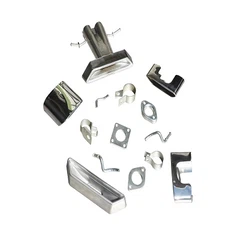
In addition to Manifold Inlet, there are other components in the exhaust system that work together to reduce emissions. For example, the Muffler Clamp is an important part of the exhaust system that helps to secure the muffler in place. A properly installed muffler clamp ensures that the muffler functions effectively, which can contribute to reducing noise and emissions.
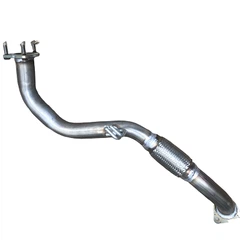
Another key component is the Exhaust Y Pipe Connector. This connector is used to join two exhaust pipes into one, which can help to optimize the flow of exhaust gases. By improving the exhaust gas flow, the Exhaust Y Pipe Connector can enhance the overall performance of the engine and reduce emissions.
Conclusion
The manifold inlet plays a critical role in engine emissions. A well - designed manifold inlet can significantly reduce the production of pollutants such as carbon monoxide, hydrocarbons, and nitrogen oxides by ensuring a more complete and efficient combustion process. As a leading supplier of Manifold Inlet, we are dedicated to providing high - quality products that not only improve engine performance but also have a positive impact on the environment.
If you're interested in learning more about our manifold inlets or other exhaust system components, we invite you to contact us for a detailed discussion. Our team of experts is ready to assist you in finding the best solutions for your specific needs. Whether you're an automobile manufacturer looking to meet strict emission standards or an engine enthusiast seeking to improve performance, we have the products and expertise to help you achieve your goals.
References
- Heywood, J. B. (1988). Internal Combustion Engine Fundamentals. McGraw - Hill.
- Crolla, D. A. (2001). Vehicle Dynamics: Theory and Application. Society of Automotive Engineers.
- Stone, R. (2012). Introduction to Internal Combustion Engines. Pearson Education.
Send Inquiry