

Structure And Composition Of Exhaust Pipe
Aug 30, 2024
Leave a message
A typical exhaust system typically consists of the following parts:
Exhaust manifold: located at the top of the engine cylinder, responsible for receiving exhaust gases from each cylinder and collecting them into the exhaust system. When the engine hood is opened, the exhaust manifold can be seen inside the engine compartment. There are also oxygen sensors on the exhaust manifold, and there are oxygen sensors before and after the three-way catalytic converter. The oxygen sensors can detect the oxygen content in the exhaust gas and feedback the signal to the ECU, which adjusts the air-fuel ratio accordingly. The second oxygen sensor is mainly used to check whether the three-way catalytic converter is effective.
Catalytic converters are typically made of precious metal catalysts such as platinum, palladium, and rhodium, which help reduce the concentration of pollutants in exhaust gases and protect the environment.
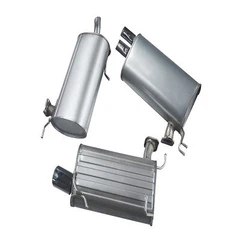
Muffler: Its function is to reduce the noise generated during exhaust. The design of mufflers helps to change the path of exhaust gas flow, thereby absorbing sound waves.
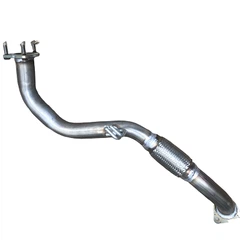
Exhaust pipe: a pipe that connects various components and is responsible for transporting exhaust gas from the engine to the outside. The diameter, length, and shape of the exhaust pipe all affect the efficiency of exhaust gas flow, which in turn affects engine performance. The general exhaust pipe consists of a head, a middle, and a tail. The first section is the exhaust manifold, the middle section is the longer pipe on the chassis, and the tail section is the part near the rear bumper.
Send Inquiry